
Why Baking Soda Is My Pesticide Wash of Choice
Quick myth-bust before we get into it: baking soda doesn't contain aluminum, and studies have actually shown a baking soda and water soak to be more effective at removing pesticide residue than those "electrolyzed alkaline water" machines everyone's been buying.
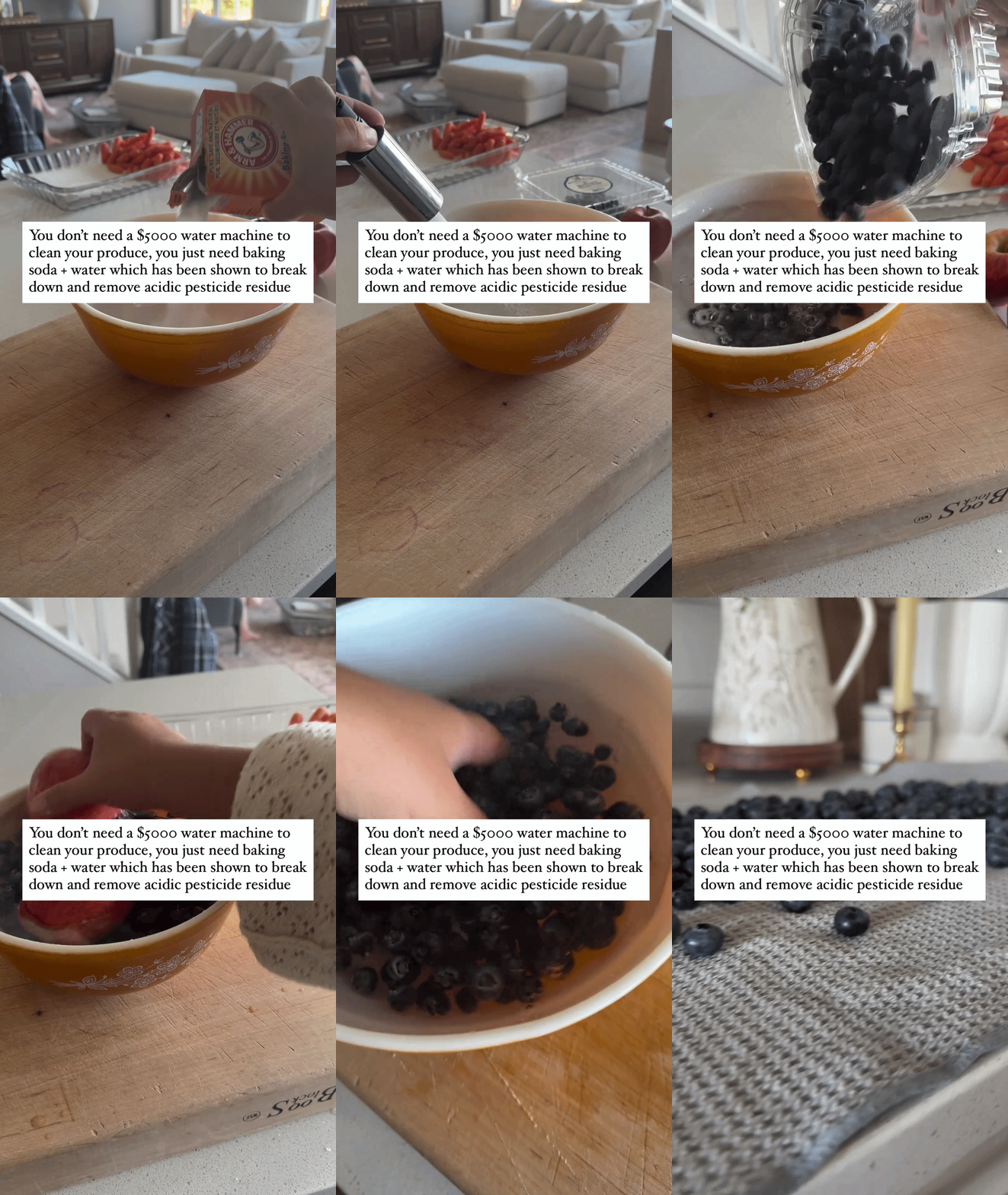
You don't need an expensive water machine or fancy produce sprays to clean your fruits and veggies. Soaking produce in a simple mix of water and baking soda is actually one of the most effective ways to break down and remove pesticide residue. It costs just pennies, takes a few minutes, and gives me peace of mind knowing I am serving my family cleaner, safer food without breaking the bank.
Does reducing toxin exposure have to be complicated or expensive?
Not at all. We all know pesticides get absorbed into produce, and this is one evidence-based way to remove some of that residue, without needing to overhaul your whole grocery budget. Not everyone can afford pesticide-free produce (and worth remembering, organic is still sprayed!), so this is a genuinely great low-cost option for a lot of families.
Interestingly, sodium bicarbonate has also been shown to help support recovery in cases of pesticide poisoning, so its ability to interact with pesticide residue isn't just theoretical.
A University of Massachusetts study found that a 2-minute baking soda soak removed more pesticide residue than a 2-minute tap water rinse, and soaking for 10 to 15 minutes removed essentially all detectable residue. Key word there: residue.
You don't need a $5,000 machine to create an alkaline environment. Baking soda does the same job.
How do I do it?
Two teaspoons of baking soda per quart of water. Let your produce soak for 10 to 15 minutes, then rinse.
One note: soft berries like raspberries may not hold up well to a longer soak, so keep an eye on those.
A few things worth knowing:
Organic doesn't mean pesticide-free.
Baking soda and water creates an alkaline solution.
Adding vinegar (an acid) can cancel out that alkalinity, depending on the ratio.
This method reduces pesticide residue, it doesn't guarantee zero pesticides.
This might be the best someone can realistically do for their family right now, and that is enough.
I'm not a purist here, just a mom trying to reduce pesticide exposure during a genuinely difficult financial climate. Small, doable swaps count.
Sources: PMID 30736280, PMID 29067814
If swapping out a typical store-bought staple for something you make yourself is your thing, I've also written about the oat bars I make instead of serving cereal, another simple swap that makes a real difference without much extra effort.
How do you wash your produce? Let me know below.
Thanks for being here, friends!