
A deep dive of the research on Acemannan
Disclaimer: This is not to discredit anyone's lived experience, this is simply for those who want to dig into the research behind it and how that could correlate to real life applications. I am no stranger to deep dives and the fury they bring people, but pleaaaaaaase don’t leave emotionally triggered comments, exerts or studies you got from ChatGPT. If I wanted to go back and forth with ChatGPT, I’d make an account. If we want informed consent, we need to be willing to accept it for everything - not just pharma.
Now that we’ve cleared that up, let’s get into it.
Acemannan was identified in the 1980’s and Carrington Laboratories became one of the major organizations developing it as a medical ingredient. They named it “Carrisyn”. Acemannan itself can’t be patented, but they patented the specific acemannan extraction methods, and medical uses. Patents don’t mean the product itself is safe or effective, it just gives us a clue that there was potential for it to be commercialized.
When it comes to the actual research, there are hundreds of studies on various parts of the aloe plant, polysaccharide as a whole and related compounds, with about 70 of those are on acemannan itself. The majority of these studies are in vitro or animal studies with only around 8 being on human trials.. This is important because in vitro and animal studies do not always show us exactly how they will correlate with humans. The dose is often different, absorption, delivery type and even how it’s metabolized can vary.
We have seen conflicting results many times, like with animal studies showing antioxidants are remarkable for heart disease but the human trials showing no impact as an example. In terms of human studies, acemannan has only been studied in about 315 people in various forms. Of those humans studies, acemannan shows really promising results with bone regeneration and tissue repair when used locally. Specifically with mouth ulcers, tooth extraction and dental bone regeneration. For animal studies, we’ve seen faster wound closure, improved tissue organization, and increased repair signaling.
Again, this doesn’t mean it will have the same results in humans but it could give us a clue. In preclinical studies, acemannan has shown its strongest signals in immune regulation, wound healing, and tissue regeneration.“Preclinical” means before large human clinical trials, these are mainly cell studies and animal studies but again, strong in vitro (cell) and animal studies only correlate to successful human trials about 10-20% of the time.
It has been studied quite a bit preclinically, but very little in humans and this could be for a few reasons..
First, human studies are expensive and harder to conduct and they typically need a specific ailment to target. “Modulating the immune system” would not be applicable but rather something more specific like “tooth extraction and bone regeneration”. The immune system is one of the hardest bodily systems to study because it doesn’t have a singular pathway, we will likely never see specific studies on the topic with promising results simply because of this.
It could also be that the researchers didn’t see a potential for it to be successful. A 1996 double-blind placebo-controlled pilot trial for HIV was conducted, but unfortunately, this study didn’t show remarkable improvement. The strongest evidence for acemannan is for tissue repair, not immune function. Remember this because I’m going to circle back!
Funding and profits is another reason. The majority of the research has been individually funded, and it’s not necessarily profitable. The tooth extraction healing industry, where acemannan shows promising results, is not the largest money maker out there.
The early research was conducted and funded by Carrington Laboratories itself and they studied their specific isolation concentration of acemananan “Carrisyn” so although a supplement may list “acemannan” on the label, it may not be the same molecularly as “Carrisyn” which was being studied. This laboratory could have funded their own studies out of pure dedication, or it could be viewed as a conflict of interest.
I want to point this out because if we are going to be up in arms about pharma funding their own studies…
We need to have consistency across the board for credibility sake. The wellness world loses a lot of credibility with things like this and I believe this, along with the inability to properly decipher studies the studies being cited, to be a huge reason why there is a lack of respect.
For a quick crash course - promising animal + in vitro studies only correlate to positive human outcomes about 10-20% of the time. We cannot cite these studies claiming they will have the same result in humans with confidence, because it’s truly just speculation.
We have to understand nuance, the progression of studies and the difference between them to accurately use them to back our stance. I have seen “peer reviewed” thrown around for decades in the wellness world, but I think you’d be shocked at what that really means..
A few claims I’ve seen that I don’t think the research backs:
“Acemannan is an immune modulator, which means it helps to keep the immune system even rather than boosting it”
The evidence on this is in vitro and animal studies, with the one human study not showing promising results, so we can’t say for sure that’s how it will work in humans outside of a petri dish. The research doesn’t confidently conclude that it is an immune modulator in humans.
“There is 200 million dollars in research so it works”
Maybe? The amount of money spent on research includes products, materials, time, patents, really anything related to research… My question would be if there was so much money being invested, why weren’t they investing in human studies to give it more credibility.
Many products, natural and synthetic, have been invested in. Resveratrol, Antioxidants for Heart Disease, and Alzheimer's amyloid drugs all had billions of dollars into research because researchers were convinced from in vitro and animal studies that they would be successful.. and they failed. Again, not saying this is the case, but this isn’t a selling feature for me personally.
“There are over 700+ studies proving it works”
There are over 700 studies on compounds in the aloe vera plant, with around 80 of those being on acemannan itself but only a handful of those being on humans. The majority are in vitro or animal studies. Just because there was promising results in an animal study, doesn’t mean humans will see the same results, many analyses suggest less than 10–20% of highly promising animal findings are eventually translated into successful human treatment.
“They don’t want to study it because it’s too powerful and they can’t make money from it”
I know that the wellness world has us convinced that pharma can’t make money from plants, but this is false. Many, many drugs are derived from plants but they want to see strong clinical application before moving forward because they want to make money!
“The research is behind, it gets bought and paid for, it’s corrupt”
Definitely not arguing that, but if we are going to say this and in the same breath say that it has hundreds of studies backing it.. that’s a contradiction right?
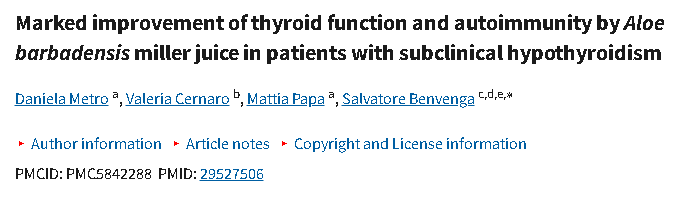
PMID: 29527506
A lot of the studies were done using aloe vera juice and other compounds like this one showing increased NK-cells in a small human trial.
This is fantastic, because aloe juice is a lot more accessible.
“Okay, but an acemannan supplement has WAY more acemannan than a juice ever could”
A bigger, stronger dose of acemannan doesn’t mean it’s better. This is where it gets tricky to say “Aloe juice made an impact so a larger amount of acemannan will make an even better impact” because there are several cases, like with echinacea for example, where a lower dose shows significant impact where a larger dose shows the opposite. We have no evidence to say one way or another.
With immune-active compounds, they often have something called a “bell shaped” or “hormetic” dose response, because many compounds that interact with the immune system don’t have a linear dose response.
Too little and there is little or no effect.
An optimal dose can give desired biological effect.
Too much can have no additional benefit or even reduced benefit.
None of this means that acemannan doesn’t work, nor does it mean that it’s a total scam. I’ll get into this soon but..
Informed consent means laying it all out, good, bad, ugly and nuances.
Some people want solid research behind a product before taking it and that’s totally cool. Everyone deserves to make a decision out of informed consent, not fear or coercion.
Not that my opinion matters, and please don’t base your decision on mine, but this is how I feel: I was wildly underwhelmed with the research. The majority of the commonly cited studies are not applicable, not done on humans or simply an assumption that it will correlate to a specific supplement.. Personally, if I cite research, I don’t want to be able to poke holes in it because some people DO rely heavily on studies to make a decision and this would discredit me.
If I were to only be deciding based on the research, I wouldn’t consider it.
Rarely do I choose something just based on the research though, studies give us clues and information but I like to form an opinion based on all the information presented: And this means looking at the testimonials. I don’t want to discredit testimonials because I know myself I’ve had wild experiences that aren’t backed by studies. Whether placebo or not (I LOVE a good placebo), real life testimonials can show a bigger picture that hasn’t been studied and maybe never will be.
I scoured the internet for anonymous testimonials, personal stories and reviews and they were overwhelmingly positive with the main success story being with treating eczema. This makes a lot of sense if we go back and look at the research for wound healing. I also saw a lot of women who wanted personal experience from those who DON’T sell it, which is so valid. I highly recommend searching it on reddit, asking your friends and looking beyond those who are incentivized.
As a content creator myself, I truly believe the majority of content creators are being genuine but I can also understand the skepticism, so look elsewhere if you need!
For the sake of using myself as a human guinea pig, because the testimonials ARE incredible, I bought two different brands. One from an MLM and one from a Dr who’s been studying and selling it since the 90’s. Before I jump in though, I’m obviously going to pull my own labs for some data. I (un)forunately don’t have eczema or any other ailments that acemannan has been claimed to treat though, so if you do and you’d like to join this experiment - I’m starting with aloe juice because a good majority used it!
My 100th disclaimer; I am not discrediting anyone’s lived experience, but rather laying out the research (that I didn’t conduct myself) and helping you understand what it means.